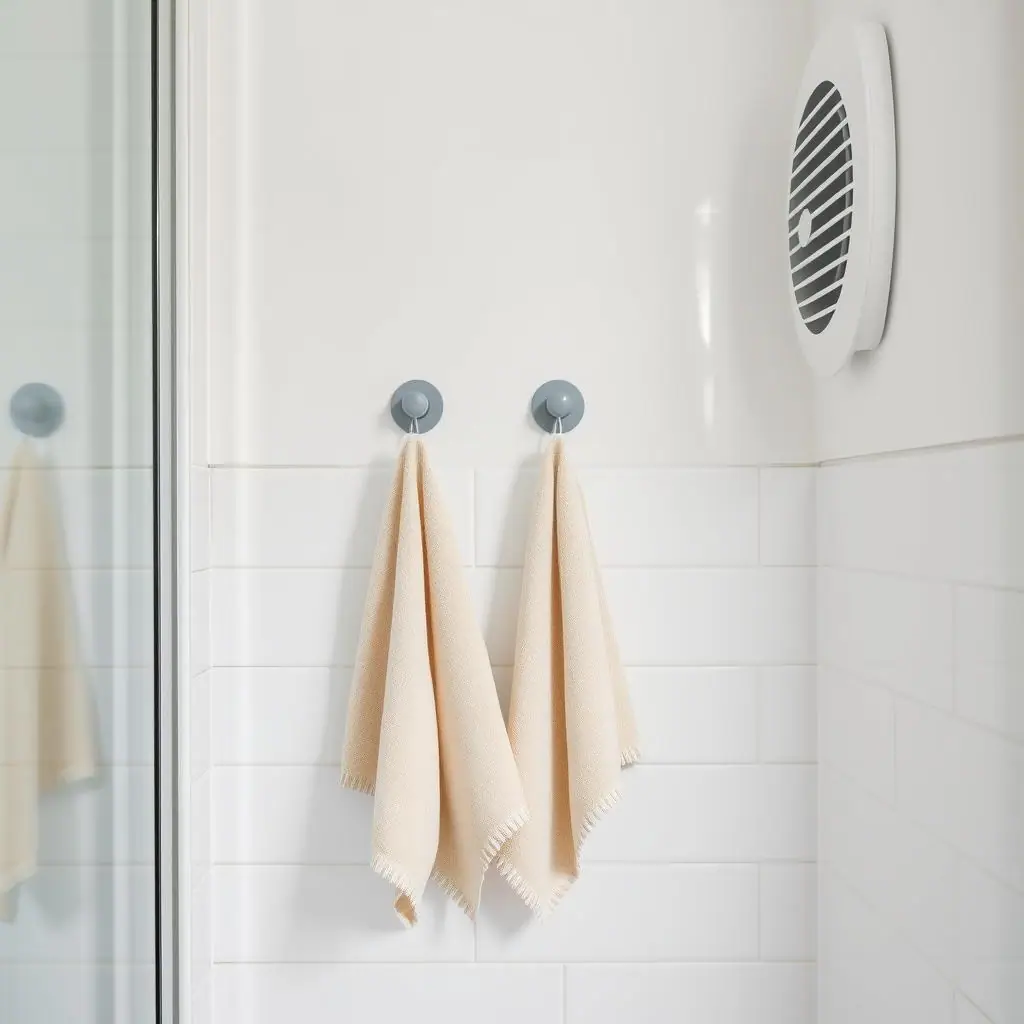
Bathroom humidity and adhesive hooks can work together in some renter-friendly projects, but the bathroom is not the same as a dry hallway wall. Steam, splashes, cleaning products, and daily temperature changes can weaken the bond or make a good hook fail sooner than expected.
For renters, the goal is not just getting a towel hook to stay up for a week. The better goal is choosing a low-risk spot, using a product made for that environment, and planning removal before the lease inspection. A bathroom hook should be treated as a small system: surface, moisture, weight, prep, wait time, and normal use.
Why Bathroom Humidity and Adhesive Hooks Need Extra Care
Most removable hooks depend on steady contact with a clean, dry, stable surface. Bathrooms challenge that contact. A wall may be dry when you install the hook, then damp after every shower. A tile may look clean but still have soap film, hard water minerals, or cleaner residue on it. A painted wall may handle a picture strip in a bedroom but struggle near a shower.
Command's official FAQ page lists common compatible surfaces such as painted wallboard, glass, tile, metal, and painted or finished wood for many Command products. It also says products are intended mostly for smooth surfaces. That matters in bathrooms because rough texture, grout, wallpaper, fresh paint, or damp surfaces can change the result.
A second useful reference is the brand's page for Bathroom Solutions, which is a reminder that bathroom-specific products exist for a reason. Do not assume a general indoor hook has the same moisture tolerance as a product labeled for bathroom use.
Start With the Surface, Not the Hook
The best bathroom adhesive decision starts with the exact surface. Smooth glazed tile and glass usually give adhesive more contact area than textured paint or raw wood. Painted drywall can work in some dry bathroom zones, but it is more sensitive to moisture, paint age, and surface condition.
If you need a full surface compatibility refresher, NoDrillHome's guide to what sticks to painted drywall, tile, glass, and wood explains why the same adhesive can behave differently in different rooms. Use that thinking before you decide where a bathroom hook belongs.
Better bathroom locations
- Smooth tile away from direct spray: often a better candidate than painted wall near a shower.
- Glass or mirror only if approved: use products that specifically allow that surface and avoid heavy items.
- Dry painted wall zones: consider areas near a door or vanity instead of inside a steamy shower zone.
- Finished wood only with caution: painted or sealed trim may still be more expensive to repair than a small wall mark.
Riskier bathroom locations
Be careful with textured paint, wallpaper, peeling paint, grout lines, raw wood, damp drywall, freshly painted walls, and places that get direct shower spray. Also avoid hooks where someone will pull hard sideways, such as robe hooks behind a tight door or towel hooks used by children.
How to Handle Bathroom Humidity and Adhesive Hooks Step by Step
Use this process before installing any no-drill bathroom hook. It is slower than sticking the hook up immediately, but it reduces the chance of a surprise fall or move-out damage.
Step 1: Read the exact product instructions
Do not rely on the word adhesive alone. Check the package or official page for approved surfaces, weight limits, bathroom or moisture wording, cleaning method, wait time, and removal method. If the product does not mention bathroom use, treat wet or steamy zones as a higher-risk choice.
Step 2: Choose a low-moisture spot
Stand in the bathroom after a normal shower and notice where moisture collects. Mirrors fog, tile near the shower stays damp, and corners may dry slowly. Put adhesive hooks where air moves and surfaces dry faster.
Step 3: Clean and dry the surface fully
Soap film and bathroom cleaners can interfere with adhesion. Follow the product's cleaning guidance, then let the surface dry completely. For a broader prep routine, review NoDrillHome's guide on cleaning walls before adhesive hooks or strips.
Step 4: Keep the load boring
Bathroom hooks often fail because the item becomes heavier than expected. A damp towel weighs more than a dry one. A robe can tug sideways when pulled from a hook. Stay below the listed limit and avoid glass shelves, framed mirrors, ceramic items, or anything that could hurt someone if it drops.
Step 5: Wait before loading
Many adhesive products need time before they hold their rated load. If the instructions say to wait, do not shorten that step just because the hook feels stuck. In a humid room, patience is part of the installation.
Pros and Cons
Renter-friendly when conditions fit
A bathroom-rated adhesive hook can add a towel, robe, or caddy spot without drilling through tile or wallboard.
Easy to test in small steps
You can start with one light hook in a dry zone before committing to a larger bathroom organization plan.
Good for lightweight routines
Small hand towels, loofahs, light cords, and modest accessories are better matches than heavy shelves or wet storage.
Humidity shortens the margin for error
Steam, splash zones, and slow-drying surfaces can make a hook less dependable than it would be in a dry room.
Removal can still damage weak finishes
Even a removable product can pull paint or finish if the surface is fragile, damp, old, or not removed as directed.
Common Bathroom Hook Mistakes to Avoid
The most common mistake is treating a bathroom like any other room. The second is hanging something while the surface still feels dry to the hand but has hidden residue or moisture from cleaning.
- Using a dry-room hook inside a wet zone: choose bathroom-rated products when moisture is part of the job.
- Hanging over grout lines: place adhesive on smooth tile faces, not porous or uneven grout.
- Loading with damp towels too soon: wait as directed, then start with lighter use.
- Ignoring ventilation: a fan, cracked door, or open window can help surfaces dry after showers.
- Forgetting the lease: if your rental rules limit adhesives, product labels do not override those rules.
For lease or housing questions, USAGov's housing help page can point U.S. renters toward official housing resources. It is not a substitute for your lease, local law, or property manager's written rules.
A Simple Bathroom Adhesive Checklist
Before you press the hook onto the wall, answer these checks:
- Surface: is it smooth, stable, clean, dry, and listed by the product?
- Moisture: is the spot away from direct spray and slow-drying steam zones?
- Product: does the package mention bathroom, moisture, or the exact surface?
- Weight: is the item light even when damp or used daily?
- Use pattern: will people pull straight down, sideways, or with force?
- Wait time: can you leave it unloaded for the full recommended period?
- Removal: will the tab or removal path stay accessible later?
When to Choose a Different No-Drill Option
Adhesive is not the only renter-friendly answer. If the bathroom is very humid, poorly ventilated, heavily textured, or already showing paint trouble, choose a lower-risk method.
An over-the-door hook, freestanding towel stand, suction product made for smooth tile or glass, tension-based shower caddy, rolling cart, or countertop organizer may make more sense. These options still need common sense, but they avoid relying on paint or wall finish to carry the load.
Frequently Asked Questions
Do adhesive hooks work in humid bathrooms?
They can, but only when the product is suitable for the surface and bathroom conditions. Smooth, clean, dry surfaces away from direct spray are safer than damp or textured areas.
Can I hang wet towels on adhesive hooks?
Be careful. A wet towel is heavier than a dry towel and may tug the hook during daily use. Stay well below the stated limit and choose bathroom-rated products.
Are adhesive hooks safe on bathroom tile?
Smooth glazed tile is often a better candidate than painted drywall, but the hook should sit on the tile face, not grout, and the product must allow that surface.
What should I do if I am not sure?
Choose the lower-risk option: a lighter item, a drier location, a freestanding organizer, or written guidance from the landlord or product manufacturer before installing.
Final Thoughts
Bathroom humidity and adhesive hooks are not automatically a bad match, but they need a careful setup. Start with the surface, choose a product meant for the room, keep the load light, wait before use, and plan removal before you press anything onto the wall.
If the bathroom is damp, poorly ventilated, textured, or lease-sensitive, skip the adhesive and use a freestanding or over-the-door option instead. A no-drill project is only successful if it stays useful and comes down cleanly later.