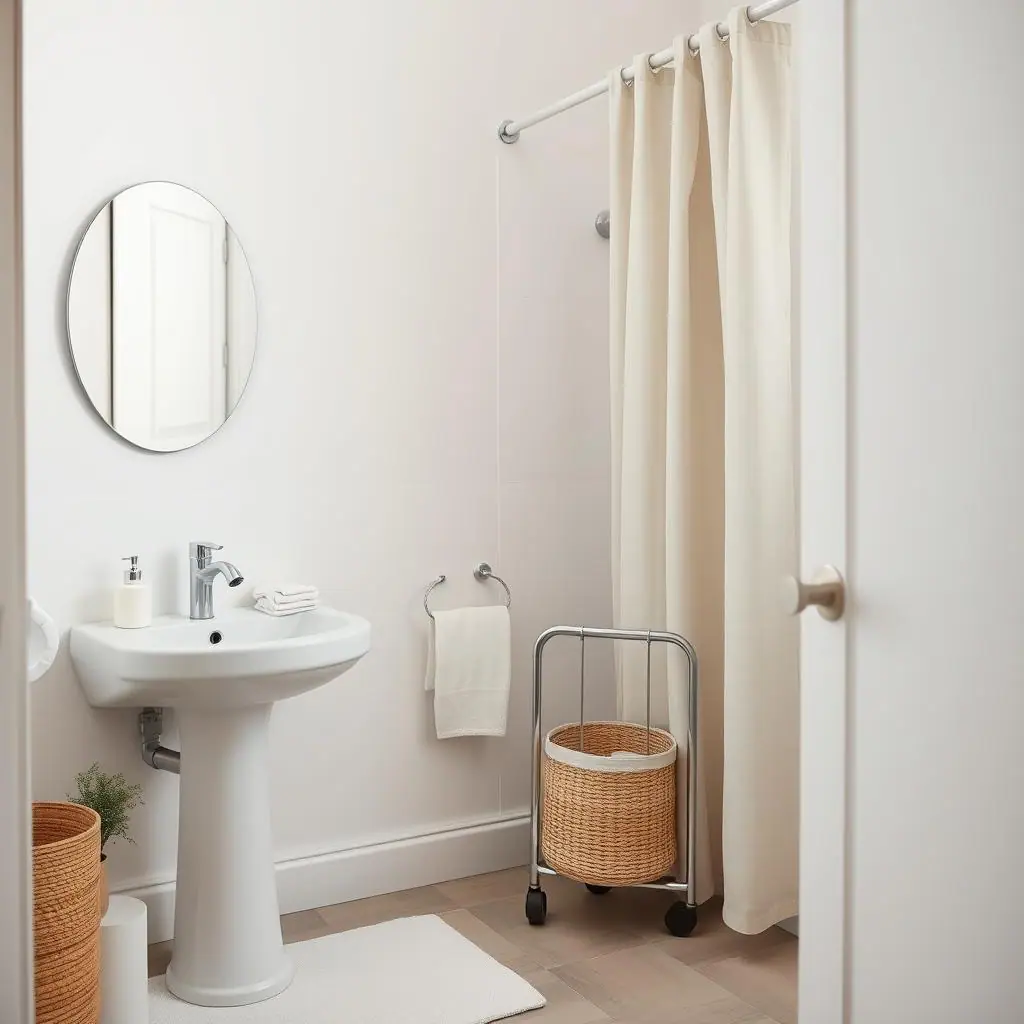
Bathroom refresh ideas without replacing fixtures are useful when your rental bathroom feels tired, but the sink, shower, tile, vanity, and toilet all need to stay exactly where they are. The goal is not to pretend you did a renovation. The goal is to make the room cleaner, calmer, and easier to use without drilling, rewiring, replacing plumbing parts, or creating a move-out problem.
A bathroom is also less forgiving than a bedroom or hallway. Moisture, cleaners, textured tile, old paint, and daily towel weight can make removable products fail faster. Before adding anything adhesive, check the lease, the surface, the product instructions, and the removal plan. A small reversible change done carefully is better than a dramatic upgrade that leaves residue or torn paint later.
Why This Matters
Bathrooms often look unfinished in rentals because the permanent pieces are plain and hard to change. You may not love the mirror, light fixture, towel bar, cabinet color, or floor, but replacing those items can cross into landlord permission, plumbing, electrical, or repair territory. A safer refresh works around the fixtures instead of fighting them.
For adhesive hooks and bathroom accessories, manufacturer instructions matter. Command's official bathroom solutions instructions show that even removable bath products have specific application and removal steps. That is a reminder to match the product to the room, not just to the look you want.
Once you accept those limits, a bathroom refresh becomes easier to plan. You can change the visual mood with textiles, storage, lighting warmth, cleaner edges, and removable accents while leaving fixtures untouched.
Start With Renter-Friendly Room Refreshes
Renter-friendly room refreshes work best when you decide what problem the room actually has. A bathroom may feel outdated, cluttered, dark, cold, or mismatched. Each problem points to a different no-drill solution.
If the room feels cluttered
Start with storage, not decor. Remove expired products, duplicates, and items that belong somewhere else. Then add one contained home for daily items: a tray, drawer bin, over-toilet shelf, narrow rolling cart, or over-the-door organizer. A neat counter makes old fixtures less noticeable.
If the room feels cold or unfinished
Use soft goods first. A better bath mat, matching hand towels, a fabric shower curtain, and a small washable rug can make the bathroom feel designed without touching the walls. Choose colors that work with the existing tile and vanity instead of trying to hide them completely.
What to Check First for Bathroom Refresh Ideas Without Replacing Fixtures
Before buying anything, check the surfaces. Smooth tile, glass, sealed metal, painted drywall, laminate, and textured walls all behave differently. A product that holds on tile may be a poor fit for peeling paint or a damp wall beside the shower.
Weight limits matter too. Command's official product weight limits guide separates products by intended load, which is important in bathrooms because towels, caddies, and baskets get heavier during normal use. Use the rating for the exact product, then stay conservative.
Check moisture zones
Divide the room into dry, damp, and wet zones. Dry zones include the back of the door, a wall away from the shower, or the side of a vanity. Damp zones include areas near the sink and shower. Wet zones include shower walls, tub surrounds, and surfaces that get direct spray. The closer an upgrade is to water, the more cautious you should be.
Check lease and building rules
Some landlords allow removable hooks but not peel-and-stick tile, contact paper, adhesive mirrors, or changes to fixture finishes. Read the lease before a larger project, especially if the change covers a wall, cabinet, floor, or mirror.
If a dispute or unclear rule comes up, general tenant resources such as USA.gov tenant rights guidance can point readers toward broader help, but the first documents to check are still your own lease, move-out rules, and written property guidance.
How to Handle Bathroom Refresh Ideas Without Replacing Fixtures Step by Step
Use this sequence to keep the project practical and reversible.
Step 1: Reset the counter
Clear the sink area completely. Put back only what you use every day. Use a washable tray for soap, skincare, toothbrush cups, or hair tools that need to cool. A tray makes the counter look intentional and gives you one item to lift when cleaning.
Step 2: Improve the shower curtain zone
A shower curtain is one of the easiest fixture-free upgrades. Choose a fabric outer curtain and a washable liner that fits the tub length. If the existing rod is allowed to stay, use it. If you need a tension rod, check the wall material, span, and pressure carefully so it does not slip or mark the surface.
Step 3: Add storage that does not depend on weak walls
For heavy or wet items, prefer freestanding or over-door storage. A slim rolling cart, toilet-top tray, small ladder shelf, or cabinet organizer can solve more problems than a wall-mounted basket. Use adhesive hooks only for light items that match the product instructions.
Step 4: Warm up the lighting without electrical work
If you cannot replace the fixture, adjust what you can control. Use warmer bulbs only if the fixture rating allows them, add a plug-in night light, or place a small battery light inside a dark cabinet. Do not cover vents, overload outlets, or use lighting where water can reach it.
Step 5: Use removable accents sparingly
Peel-and-stick decals, removable labels on bins, or a small framed print away from moisture can help. Avoid covering large damp areas unless the lease allows it and the product is made for that surface. Large adhesive projects are harder to remove cleanly than small accents.
Step 6: Document before and after
Take photos before the refresh, after installation, and during removal. Keep product packaging or instructions until move-out. This gives you a simple record if you need to explain what changed and how it came down.
Common Renter-Friendly Room Refreshes Mistakes to Avoid
The biggest mistake is assuming removable means harmless. Bathroom refreshes fail when the product is placed in the wrong zone, loaded with too much weight, cleaned with the wrong chemical, or left up too long.
- Using regular hooks in wet zones: bathrooms need moisture-aware choices, especially near showers and tubs.
- Overloading towel hooks: wet towels are heavier than dry towels and get pulled during daily use.
- Covering problem surfaces: weak paint, cracked caulk, peeling laminate, and mildew need attention before decor.
- Choosing only pretty storage: storage should fit the product sizes you actually use each morning.
- Forgetting removal: plan how each item comes down before you attach it.
Pros and Cons
Fast visual improvement
Textiles, trays, carts, and small removable accents can make a bathroom feel cleaner without replacing fixtures.
Lower move-out risk
Freestanding and lightly removable choices are easier to document, clean around, and remove than fixture changes.
Works in small rooms
Bathrooms often need only a few focused changes because every surface is visible at once.
Moisture limits your options
Steam, splash, cleaners, and wet towels can shorten the life of adhesive products.
Some upgrades still need permission
Peel-and-stick tile, cabinet coverings, mirror changes, and fixture-adjacent work may violate lease rules.
A Simple Checklist
Use this checklist before installing any bathroom refresh:
- Surface: is it smooth, clean, dry, stable, and approved by the product instructions?
- Zone: is the item in a dry, damp, or wet area?
- Weight: will the product hold the real loaded weight, not just the empty item?
- Cleaning: can you still wipe, dry, and maintain the area easily?
- Lease: does your lease allow adhesive, peel-and-stick, or visible surface changes?
- Removal: do you know the exact removal method before installation?
When to Get Extra Help
Ask for extra help before anything involving plumbing, wiring, fixture removal, outlet changes, damaged caulk, mold concerns, heavy mirrors, ceiling attachment, or permanent hardware. Those are not good places to guess.
For simple decor, a second opinion can still help. Ask someone to check whether the curtain length, towel color, cart size, or wall accent actually makes the room calmer. A good bathroom refresh should make cleaning and daily routines easier, not just add more objects.
Frequently Asked Questions
What should I check first in a renter-friendly bathroom refresh?
Check the lease, moisture zone, surface condition, product instructions, and loaded weight. If the item will get wet or touched daily, be extra conservative.
How often should I review bathroom upgrades?
Check them after the first week, then monthly. Look for peeling edges, loose hooks, trapped moisture, rust, residue, or storage that has become too heavy.
What should I do if I am not sure a product is safe for my bathroom?
Do not install it yet. Read the product page, check the package, look at your surface, and ask the property manager if the change might affect move-out.
Can I undo these changes later?
Many bathroom refresh ideas are removable, but clean removal depends on product type, surface condition, moisture, time, and following the directions carefully.
Final Thoughts
Bathroom refresh ideas without replacing fixtures should make the room easier to use, cleaner to maintain, and calmer to look at. Start with decluttering, textiles, lighting warmth, and freestanding storage before you attach anything to a wall.
The best renter-friendly bathroom refresh is modest, documented, and easy to reverse. Choose one problem, solve it with the least permanent method, and let the room improve one careful layer at a time.