A beginner no-drill toolkit should help you measure, prep, test, hang, adjust, and remove renter-friendly upgrades without turning every small project into a wall repair risk. The goal is not to own a giant toolbox. It is to keep a small set of supplies that make adhesive strips, lightweight hooks, peel-and-stick pieces, and temporary layouts easier to use correctly.
The best starter kit is boring in a good way. It includes a level, measuring tape, cleaning cloths, painter's tape, removable hanging products, a small utility knife, and a place to store instructions. Those supplies can prevent crooked frames, rushed adhesive placement, overloaded hooks, and mystery residue at move-out.
Why This Matters
No-drill projects look simple because they avoid anchors, screws, and power tools. But they still depend on surface condition, weight, placement, waiting time, and removal technique. A picture strip used on dusty paint, a hook placed on the wrong surface, or a peel-and-stick panel trimmed with a dull blade can create more frustration than a drilled project would have.
This matters most in rentals, dorms, and shared homes where the final inspection can matter as much as the finished look. A clean setup should be reversible, documented, and honest about what the wall, door, cabinet, or tile can handle.
Start With Beginner No-Drill Toolkit Basics
Start with supplies that support many small projects instead of one trendy product. If a tool helps you measure, clean, align, protect, or remove, it earns space. If it only solves one unusual project, wait until you actually need it.
Keep the kit small enough to use
A useful kit can fit in a shoebox-size bin, small tote, or drawer. Keep adhesives in their original packaging when possible so you do not lose weight ratings, surface warnings, waiting times, or removal directions.
Separate tools from consumables
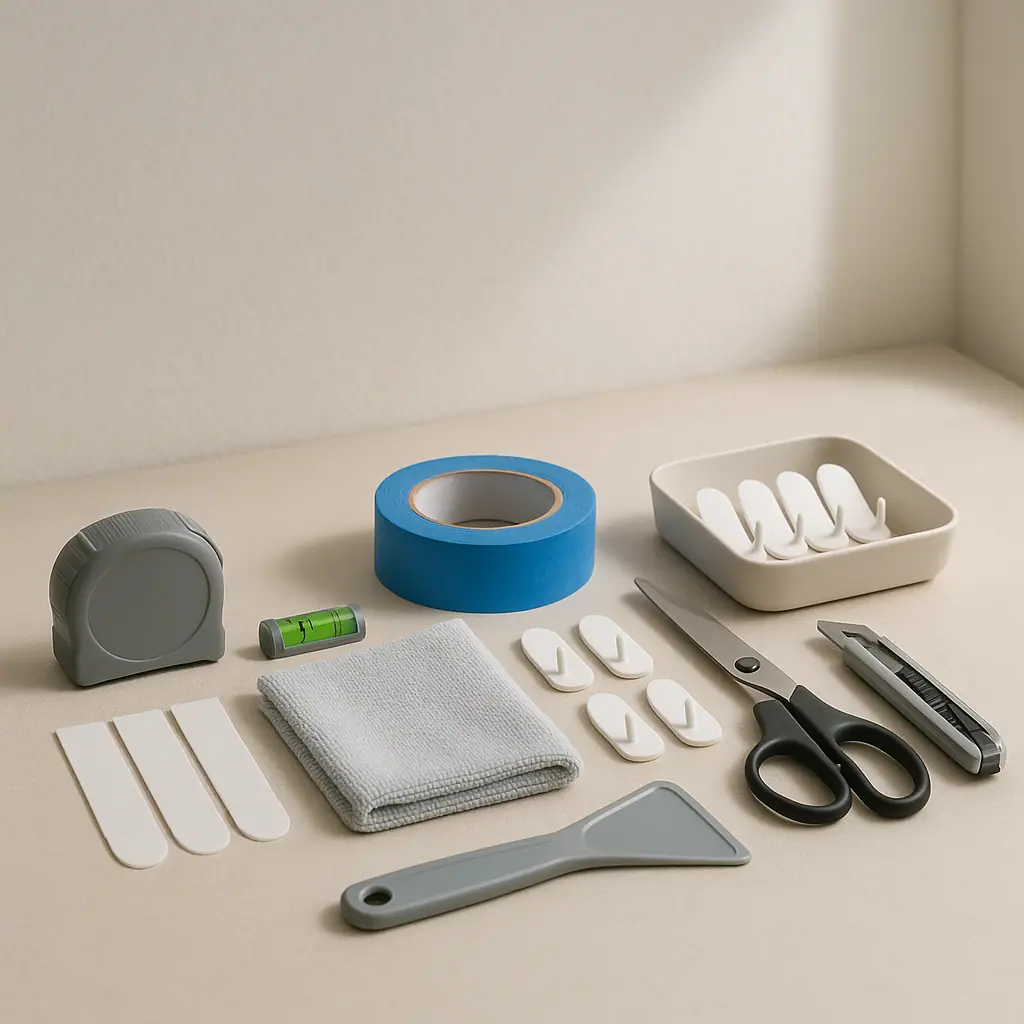
- Tools: a measuring tape, small level, scissors, utility knife, pencil, and plastic scraper can be reused across projects.
- Consumables: painter's tape, microfiber cloths, adhesive strips, rubbing alcohol wipes, felt pads, and spare tabs will need replacing.
- Records: leases, product instructions, before photos, and receipts help you remember what was installed and how it should come off.
What to Check First for a Beginner No-Drill Toolkit
Before stocking supplies, check the surfaces you actually have: painted drywall, tile, glass, metal, laminate, cabinet finish, trim, doors, or textured walls. A good toolkit should match those surfaces instead of assuming one adhesive product works everywhere.
Check product instructions before buying multiples
Command's official site organizes damage-free adhesive hooks, strips, picture hanging products, bathroom solutions, cord organizers, how-to pages, FAQs, and weight-limit guidance on the Command Brand product and instruction hub.
That source is useful because it shows why removable products should be treated as product-specific systems. A cord clip, picture strip, bathroom caddy, curtain hook, and general-purpose hook can have different limits, surfaces, and removal steps.
Check lease and property rules early
If your lease is unclear about adhesive products, temporary wallpaper, cabinet decals, or door hooks, ask before applying anything to a surface you do not own. USA.gov's housing help page points renters toward tenant-rights and housing resources, which is a useful reminder that rules vary by location and property.
For toolkit planning, the practical habit is simple: keep before photos, save product instructions, avoid permanent changes without written permission, and choose supplies that support clean removal.
How to Build the Beginner No-Drill Toolkit Step by Step
Use this order if you are starting from nothing. It keeps the kit practical and avoids buying too many removable products before you know what your home needs.
Step 1: Add measuring and layout tools
Start with a 16-foot or 25-foot measuring tape, a small level, a pencil, painter's tape, and a notepad or phone note. These prevent rushed placement. Painter's tape is especially useful for marking frame outlines, shelf clearances, and door swing zones before anything sticks.
Step 2: Add surface prep supplies
Keep microfiber cloths, mild soap, a small lint-free towel, and the cleaning wipe or alcohol type recommended by the product instructions. Surface prep matters because dust, grease, old cleaner residue, and humidity can weaken many removable products.
Step 3: Add light-duty hanging supplies
Stock a small variety instead of a huge pack: picture hanging strips for lightweight frames, small adhesive hooks for keys or tiny accessories, cord clips for cable control, and spare replacement strips. Avoid buying heavy-duty products until you have a specific surface and load in mind.
Step 4: Add cutting and trimming tools
A utility knife with fresh blades, scissors, and a small cutting mat can make peel-and-stick projects cleaner. Store blades safely, cut away from your body, and never trim directly on a rented counter, floor, or cabinet surface.
Step 5: Add protection and removal supplies
Keep felt pads, rubber bumpers, a plastic scraper, dental floss or thin line for some adhesive removal situations, and a small bag for used tabs. Do not use metal scrapers on painted walls or soft finishes unless the product instructions specifically allow it.
Step 6: Add a documentation habit
Take a before photo before larger projects, keep packaging until removal, and write down the date a product was installed. That small habit helps at move-out and makes it easier to inspect adhesive strips, hooks, and peel-and-stick surfaces over time.
The 12 Supplies Worth Owning
These are the supplies I would put in a beginner no-drill toolkit before buying project-specific items:
- Measuring tape: for wall spacing, furniture clearances, door swings, and frame placement.
- Small level: for frames, shelves, decals, hooks, and peel-and-stick tile lines.
- Painter's tape: for temporary layout marks, templates, and protecting edges while planning.
- Microfiber cloths: for dusting walls, doors, trim, tile, and cabinet faces before installation.
- Mild cleaner: for removing everyday grime when product instructions allow it.
- Alcohol wipes: only when the product instructions recommend them for that surface.
- Picture hanging strips: for lightweight frames that match the product's surface and weight limits.
- Small adhesive hooks: for keys, light accessories, and predictable low-weight jobs.
- Cord clips: for renter-friendly cable control around desks, media areas, and nightstands.
- Utility knife with fresh blades: for clean cuts on peel-and-stick projects and packaging.
- Plastic scraper: for gentle removal help on suitable surfaces.
- Storage pouch or bin: for keeping instructions, spare tabs, tools, and project notes together.
Common Beginner Tool Kit Mistakes to Avoid
The biggest mistake is treating the maximum printed weight as the everyday working weight. Product limits are not an invitation to hang the heaviest possible item on a questionable surface. Build in a margin, especially around doors, bathrooms, kitchens, old paint, textured surfaces, and valuable items.
- Buying only adhesives: measuring, cleaning, and removal supplies matter just as much as hooks and strips.
- Throwing away instructions: the packaging often contains surface warnings, weight limits, waiting times, and removal steps.
- Skipping test layouts: painter's tape templates can reveal awkward spacing before anything touches the wall.
- Using sharp tools casually: utility knives should be stored safely and used with a cutting mat, not on rented surfaces.
- Ignoring the lease: removable products can still violate property rules if they mark paint, doors, cabinets, or tile.
Pros and Cons
Prevents rushed placement
Measuring tape, painter's tape, and a level help you plan before committing adhesive to a surface.
Supports clean removal
Saved instructions, spare tabs, plastic scrapers, and before photos make move-out less stressful.
Works across many projects
The same small kit can support frames, cord control, decals, light hooks, peel-and-stick trim, and layout planning.
Still requires product judgment
A toolkit cannot make every surface safe for adhesive products, heavy loads, or temporary upgrades.
Consumables run out
Replacement strips, wipes, blades, and painter's tape need occasional restocking if you do many projects.
A Simple Checklist
Before starting a no-drill project, run this quick check:
- Surface: is it clean, dry, smooth, stable, and allowed by the product instructions?
- Weight: is the item comfortably below the product limit, not barely within it?
- Layout: did you mark the position with painter's tape before sticking anything?
- Lease: do your rental rules allow this type of temporary product?
- Removal: do you know how the product comes off and where the instructions are stored?
- Timing: does the product require waiting before loading or using it?
When to Get Extra Help
Get extra help when a project involves heavy items, valuable frames, electrical cords near heat or water, old plaster, loose tile, peeling paint, wallpaper, textured walls, or built-in cabinetry. A no-drill method is not automatically safer just because it avoids screws.
You should also pause before using removable products on surfaces that already look fragile. If paint is bubbling, trim is soft, tile grout is cracked, or a door rubs the frame, the toolkit should help you inspect the problem, not cover it up.
Frequently Asked Questions
What should I buy first for a beginner no-drill toolkit?
Start with a measuring tape, small level, painter's tape, microfiber cloths, and one small pack of removable strips or hooks. Planning and prep supplies usually prevent more mistakes than extra hardware.
How often should I review the kit?
Review it every few projects or before move-out planning. Replace dull blades, dried wipes, missing tabs, and products whose instructions or weight ratings you no longer have.
What should I do if I am not sure a removable product will work?
Do not guess. Read the product instructions, test the layout without loading it, reduce the weight, and ask your property manager if lease rules or surfaces are unclear.
Can I undo no-drill projects later?
Many no-drill products are designed to be removable, but clean removal depends on the product, surface condition, installation, time, humidity, and following the removal directions carefully.
Final Thoughts
The beginner no-drill toolkit is really a damage-aware planning kit. A few careful supplies can help you measure twice, prep once, hang lighter, and remove more calmly when the lease ends or the room changes.
Start with the 12 basics, keep the instructions, and let each project teach you what to restock. If a product or surface feels uncertain, choose the option that protects the home first and solves the decorating problem second.