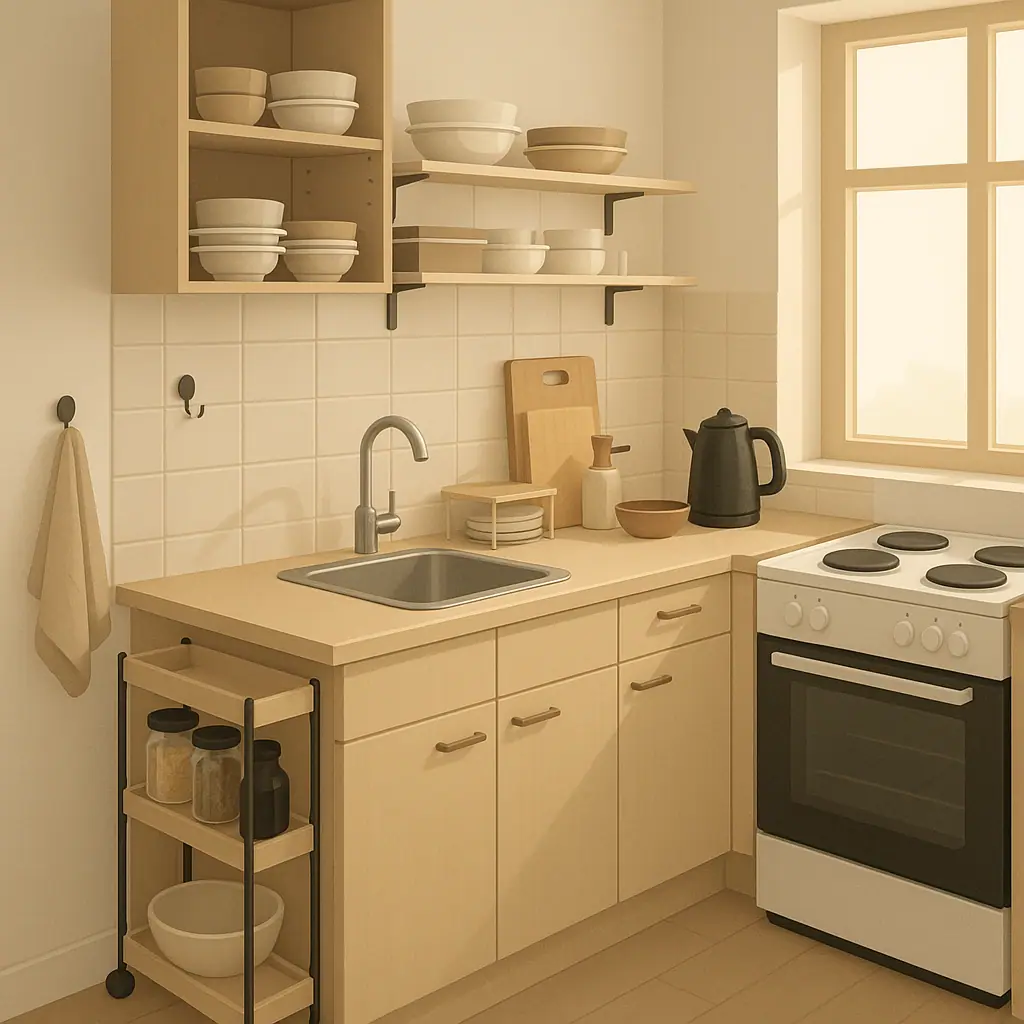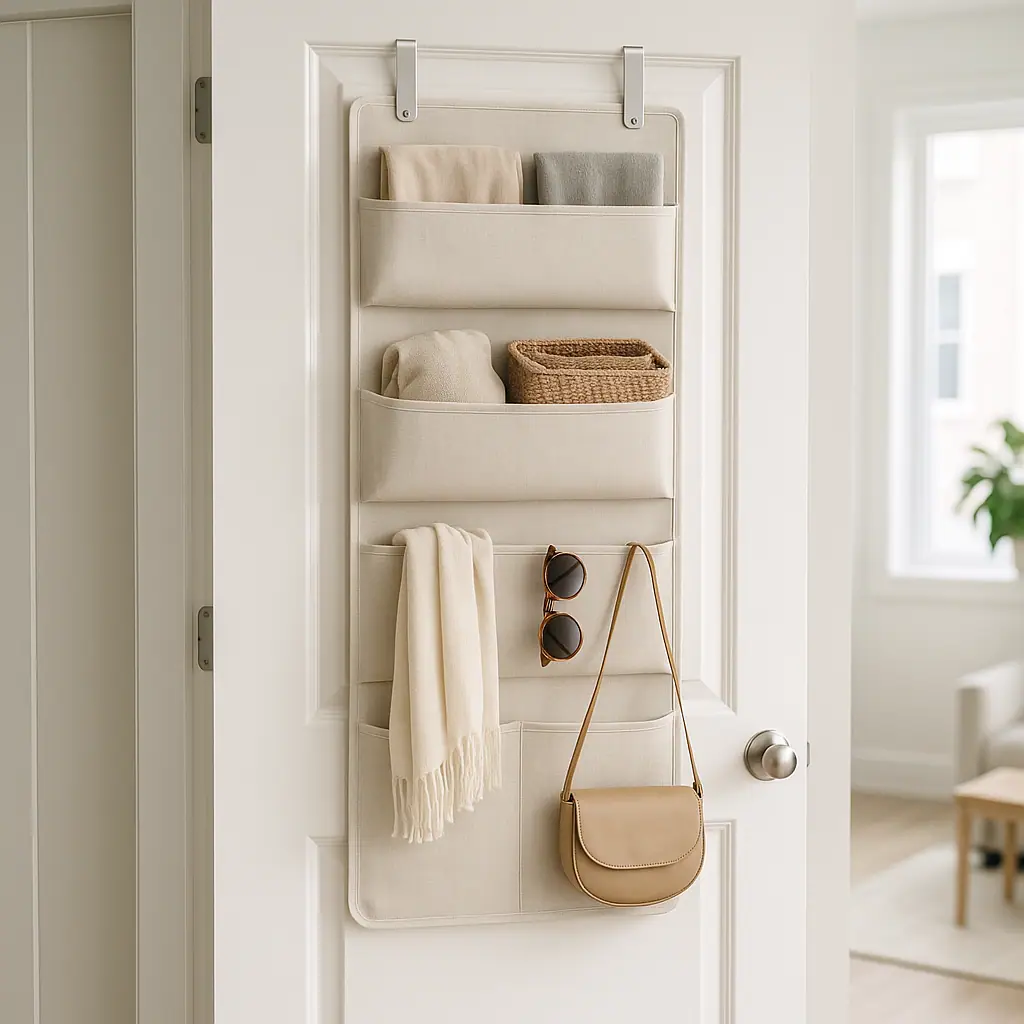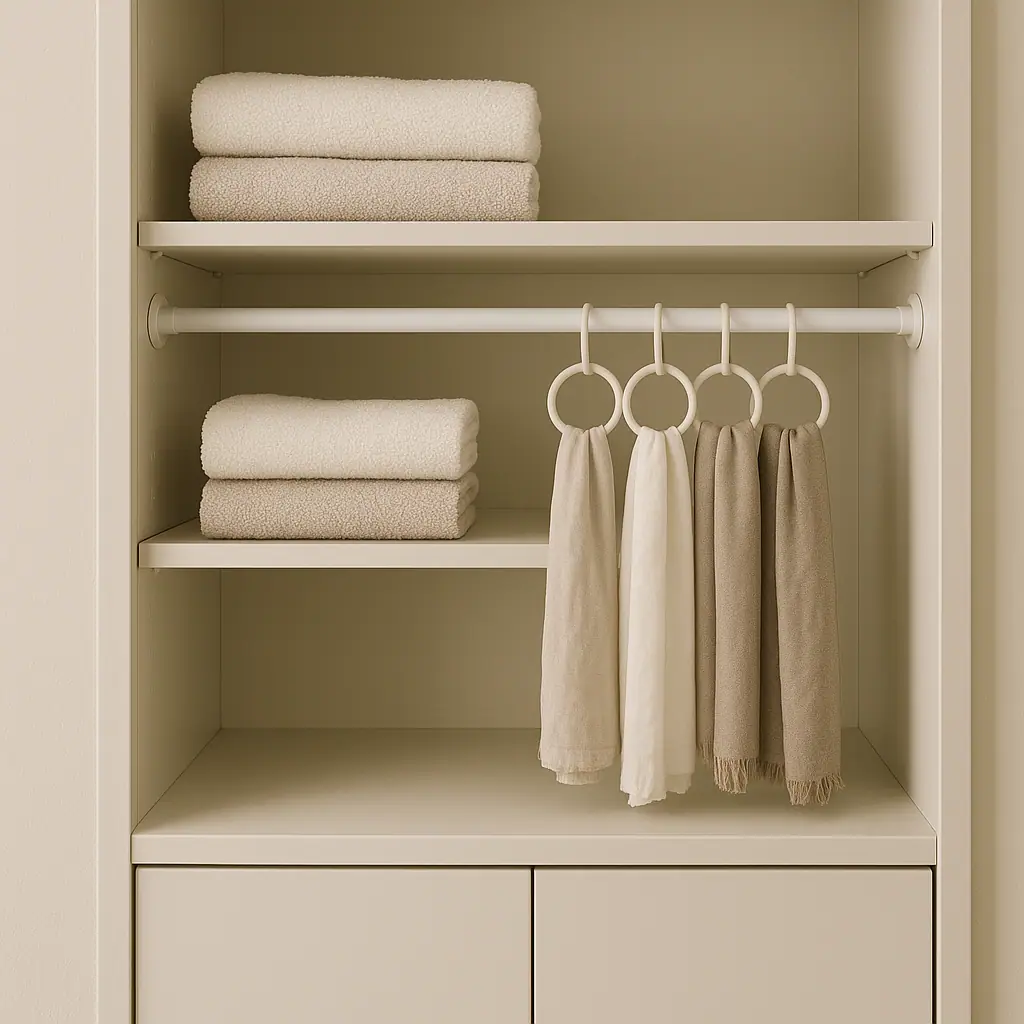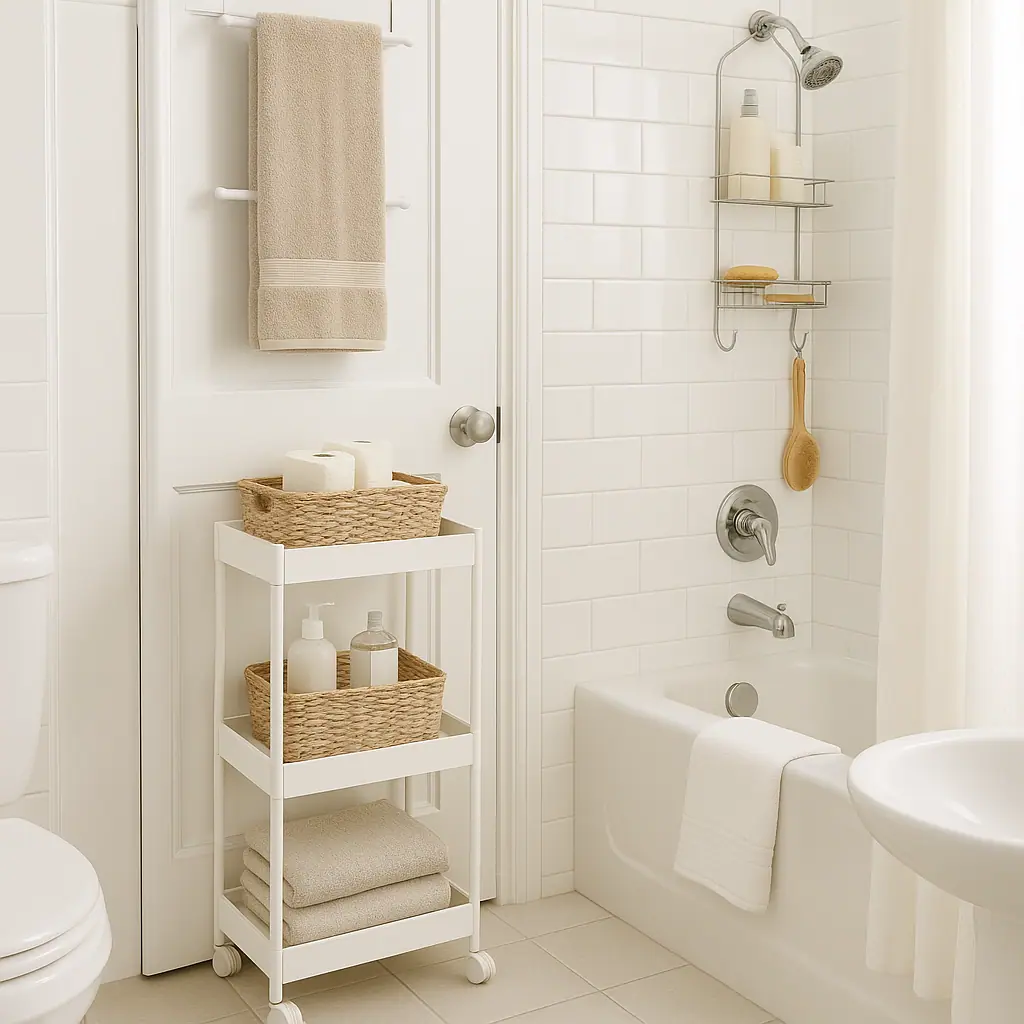
Lightweight bathroom storage ideas that do not need wall anchors can make a small rental bathroom calmer without turning the wall into a risk. The useful options are usually modest: a slim rolling cart, an over-toilet ladder shelf, a freestanding cabinet, an over-door organizer, a shower caddy, small baskets, and carefully chosen removable hooks.
The key is to treat the bathroom differently from a dry hallway or closet. Bathrooms have humidity, wet towels, slippery floors, daily bumps, and surfaces that may already have old paint, tile, grout, or glossy coatings. A storage idea that seems harmless in a bedroom can fail quickly beside a shower if it carries too much weight or sits on the wrong surface.
Why This Matters
Bathrooms often need storage in the exact places renters are least allowed to change: beside the sink, above the toilet, inside the shower, behind the door, or near a towel zone. Drilling into tile, plaster, cabinets, or a shared wall can create lease problems, waterproofing concerns, or repairs that cost more than the organizer itself.
This matters because storage in a bathroom is not just about fitting more bottles. It is about keeping daily items reachable while avoiding clutter around water, heat, electrical outlets, toilet lids, and narrow walkways.
Start With Lightweight Storage and Organization
Before buying anything, decide which bathroom problem you are solving. A crowded sink counter, loose hair tools, extra towels, backup toiletries, cleaning supplies, and shower bottles all need different storage. One product rarely solves all of them well.
Separate dry, damp, and wet zones
- Dry zone: extra toilet paper, folded towels, backup soap, skincare, and grooming tools that should not get splashed.
- Damp zone: hand towels, daily toiletries, and items near the sink that need airflow and easy wipe-down surfaces.
- Wet zone: shampoo, conditioner, body wash, razors, and shower tools that need drainage and rust-aware materials.
- Hidden zone: cleaning supplies, refills, and personal items that can live in a cabinet, basket, or lidded bin.
Measure the real bathroom path
Measure more than the empty wall. Check door swing, toilet clearance, shower door movement, towel reach, baseboards, outlet locations, vanity depth, and whether a drawer can still open. A bathroom organizer that fits the floor may still make the room harder to use every morning.
What to Check First for Lightweight Bathroom Storage Ideas That Do Not Need Wall Anchors
Start with the lease, the surface, the load, and the bathroom environment. No-drill does not automatically mean no-risk. Adhesive products, over-door hooks, and tension pieces still depend on fit, finish, moisture, and correct removal.
Check adhesive instructions before using hooks or caddies
Command's official indoor and outdoor hook instructions explain that hooks and caddies come in different sizes and weight limits, include surface-prep steps, and list surfaces and situations to avoid on the Command indoor and outdoor hooks instruction page.
That guidance is useful for bathroom storage because it shows why one removable hook should not be treated like every removable hook. Product instructions, surface cleaning, waiting time, temperature, humidity exposure, and removal direction can all affect whether a hook works as intended.
Check rental rules before changing surfaces
If your lease or property rules are unclear, ask before applying products to painted doors, built-in cabinets, tile, trim, or walls near plumbing. USA.gov's housing help page points renters toward tenant-rights and housing resources, which is a practical reminder that rules vary by property and location.
For a bathroom project, the simple version is this: read the lease, keep product instructions, take before photos, and avoid anything that could leave adhesive residue, chipped paint, swollen trim, or tile damage at move-out.
How to Handle Lightweight Bathroom Storage Ideas That Do Not Need Wall Anchors Step by Step
Use this process to choose storage in a controlled order. It keeps the heaviest and wettest items away from weak surfaces.
Step 1: Move weight to the floor first
A slim rolling cart, narrow freestanding shelf, small cabinet, or basket stack can hold backup toiletries, folded towels, toilet paper, and cleaning items without asking the wall to carry weight. Choose pieces with a stable base and easy-clean surfaces.
Step 2: Use the toilet area carefully
An over-toilet ladder shelf or freestanding rack can add vertical storage, but it should feel stable before anything valuable goes on it. Keep heavy items on lower shelves and avoid crowding the tank lid if you need regular access.
Step 3: Put the door to work only if it clears
Over-door organizers can hold hair tools, small towels, brushes, or lightweight toiletry pouches. Check that the door closes fully, the hook does not scrape trim, and the organizer does not swing into mirrors, towel bars, or tight corners.
Step 4: Keep shower storage drained and light
Shower caddies should drain, resist rust, and hold only what you use regularly. Avoid storing bulk bottles high above the tub edge. If a caddy hangs from a shower head, make sure it does not stress the fixture or block normal movement.
Step 5: Use adhesive hooks for small predictable jobs
Adhesive hooks can work for a lightweight hand towel, washcloth loop, small brush, or empty pouch. They are a poor choice for wet towels, heavy robes, loaded toiletry bags, or anything fragile. Use a safety margin instead of treating the listed maximum as the everyday target.
Step 6: Review the setup after humidity and use
After several showers, check for slipping, softening adhesive, rust, wobble, swollen wood, crowded counters, or items that keep falling. A no-drill setup should make the bathroom easier to use, not create a new maintenance task.
Common Lightweight Storage and Organization Mistakes to Avoid
The most common mistake is trying to solve a bathroom layout problem with small wall products. A dozen hooks and caddies cannot fix too many backups, too many duplicate bottles, or storage that belongs outside the bathroom.
- Putting wet weight on removable hooks: wet towels and robes are heavier than they look and can pull harder over time.
- Ignoring steam and splash zones: adhesive near showers, tubs, and sinks may face more moisture than the package example suggests.
- Blocking door movement: over-door storage should not scrape trim, hit fixtures, or make the door harder to close.
- Storing heavy items high: bulk shampoo, cleaning bottles, and stacked bins are safer low and stable.
- Skipping the removal plan: know how each product comes off before applying it to paint, tile, trim, or cabinet surfaces.
A Simple Checklist
Use this checklist before adding bathroom storage without wall anchors:
- Choose one problem: counter clutter, towels, shower bottles, backups, cleaning supplies, or hair tools.
- Sort by moisture: keep dry items away from splash zones and wet items in draining containers.
- Keep weight low: use floor pieces for bottles, towels, and refills.
- Check product limits: read adhesive, over-door, shower caddy, and freestanding shelf instructions.
- Protect surfaces: avoid rubbing trim, softened paint, loose grout, or damp wood.
- Leave space to clean: bathroom storage should not make wiping counters, floors, and tile harder.
- Review after one week: remove anything that slips, rusts, blocks movement, or collects moisture.
Pros and Cons
Easy to test slowly
You can add one cart, basket, hook, or caddy before committing to a full bathroom system.
Better for rentals
Freestanding and removable options reduce the need to drill into tile, walls, cabinets, or trim.
Flexible for small rooms
Lightweight storage can move as routines change, especially in shared bathrooms or tight apartments.
Moisture changes the risk
Bathrooms expose products to steam, splashes, wet towels, and cleaning routines that can shorten their useful life.
Capacity stays limited
No-drill storage is best for light, edited categories. Heavy or bulky storage may need another room or a freestanding cabinet.
When to Get Extra Help
Get extra help if you see loose tile, peeling paint, soft wood, mold concerns, damaged grout, leaking fixtures, or electrical outlets near the storage area. Pause before attaching anything to a medicine cabinet, vanity side, shower frame, or built-in surface you do not own.
If your bathroom is shared, agree on what belongs in the room and what should live elsewhere. Sometimes the best lightweight bathroom storage idea is moving backup supplies to a hallway bin so the bathroom only holds active daily items.
Frequently Asked Questions
What should I check first in lightweight bathroom storage and organization?
Check the item category and moisture zone. A dry towel stack, wet shower bottle, and hot styling tool should not all be solved with the same organizer.
How often should I review a no-drill bathroom setup?
Review it after the first week, then during normal cleaning. Look for slipping, rust, adhesive edges lifting, crowded counters, or door hooks rubbing trim.
What should I do if I am not sure a product is safe for my bathroom?
Do not guess. Read the product instructions, reduce the load, test the layout without attaching anything, and ask your property manager if lease rules are unclear.
Can I undo these bathroom storage changes later?
Most carts, baskets, over-door organizers, and freestanding shelves are simple to remove. Adhesive products depend on proper application, surface condition, and careful removal.
Final Thoughts
Lightweight bathroom storage ideas that do not need wall anchors work best when they respect moisture, weight, cleaning access, and move-out reality. Start with one problem, keep heavy items low, and use removable products only for jobs they can handle comfortably.
A small bathroom does not need every vertical inch filled. It needs the right items in the right zones, with enough open space to clean, reach, and remove everything later without damage.